
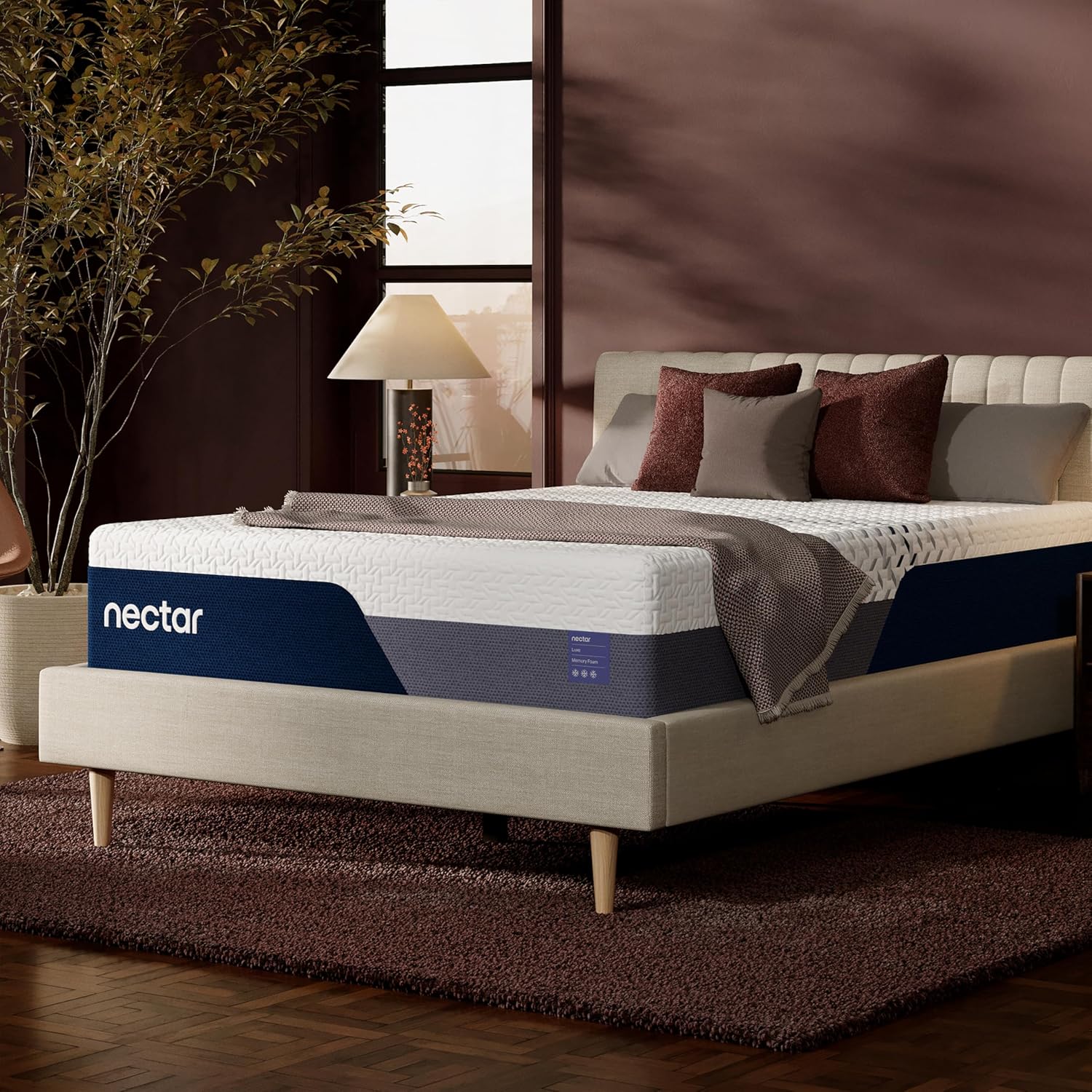
7 Common Mattress Buying Mistakes and How to Avoid Them
Key Points
- Avoid common pitfalls such as price obsession and the mattress firm-as-sin myth, and tailor the mattress to your sleep style, body shape, and comfort preferences. Here are the things you should avoid when purchasing a mattress: long-term value, quality materials, and spinal alignment, which can lead to sleepless nights and premature replacement.
- Review materials and compare constructions such as innerspring, memory foam, latex, and hybrid. Check for quality indicators such as high-density foam and pocketed coils. Try more than one firmness in-store or through at-home trials to discover your ideal firmness.
- Look beyond buzzwords and focus on measurable specifications such as foam density, coil count, and cooling features. Double-check thorough reviews from reliable publications and be wary of hyperbolic or ambiguous comments.
- Save your health. Look for low-VOC certifications and avoid hidden fiberglass. Look for independent certifications such as CertiPUR-US, OEKO-TEX, and GOLS, and avoid products with harsh, lingering odors.
- Read the fine print on trials, returns, and warranties – avoid short trials, hidden fees, or restrictive policies. Look for a minimum 90-night trial, easy returns, and a strong warranty covering defects and significant sagging.
- Ensure your foundation or box spring supports the new mattress uniformly and complies with brand specifications to maintain comfort and warranty coverage. If necessary, replace your foundation to extend its lifespan and ensure even support.

- [Experience Blissful Comfort] – Drift into a world of luxurious comfort on our memory foam mattress. The memory foam molds to your body, relieving pressure points for unparalleled rest.
- [Revitalize with Green Tea] – Infused with calming green tea, our memory foam layer rejuvenates your senses while keeping your mattress fresh day after day.
- [Harmonious Layers, Divine Sleep] – The perfect symphony of memory foam, support foam, and high-density layers orchestrates balanced support for your dreamy night’s sleep.
- [Trusted Quality, Sleep Securely] – Embrace safety and trust with our CertiPUR-US certified foams, cotton-based fire retardant, and cozy Poly Jacquard fabric cover.
- [Rest In Confidence] – Elevate your sleep experience with our honest-priced, top-quality mattresses. Enjoy a 10-year warranty, a testament to our commitment to your peaceful slumber.
Last update on 2026-10-16 / Affiliate links / Images from Amazon Product Advertising API
What to avoid when buying a mattress includes steering clear of hasty choices, shiny “sale” offers, and one-size-fits-all claims.
To minimize the risk of aches and restless sleep, avoid poor edge support, short trial periods, and thin warranties.
For older sleepers, avoid ultra-soft cores that cave in under the hips and shoulders.
To accommodate growing bodies, seek out zoning, breathable fabrics, and certifications.
To maintain your confidence, the following sections outline red flags, testing tips, and fit-by-sleep-position guidance.
Common Mattress Buying Mistakes

Mistakes here typically translate to tossing and turning, premature slumping, and double the cost. A fast-reference guide matches sleep position, body type, and budget to the perfect build.
- Trusting a quick store test. Lie down for 10 to 15 minutes, as you sleep for 6 to 8 hours a day.
- Chasing discounts over build quality.
- Ignoring materials and density specs.
- Assuming “firm is best.”
- Skipping return and warranty terms.
- Buying fast under pressure.
- For example, not matching firmness to weight and sleeping position.
Each mistake increases the likelihood of sore pressure points, bad spinal alignment, and premature replacement expenses. A systematic purchasing guide keeps you on track and saves you money!
1. Price Fixation
A higher price does not mean better sleep. Some luxury models allocate dollars to branding and quilting rather than to support layers.
Ultra-cheap beds often use low-density foams that feel great on day one but begin to sag by month six, reducing support and increasing long-term costs.
Compare specifications within your budget: foam density (30-50 kg/m³) for memory foam, coil type (pocketed vs. Bonnell), and cover quality.
Prioritize quality cores, edge support, and certified credentials over gimmicky bells and whistles.
Purchase for durability, not buzz.
2. Firmness Myths
Firm doesn’t equal “good for backs.” Proper support results in neutral spinal alignment, which varies with body weight and sleeping position.
Side sleepers typically require medium to medium-soft for shoulder and hip pressure relief, while back and stomach sleepers tend to fare better with medium to medium-firm to avoid midsection sink.
Too soft can bow the lumbar spine. Too firm can create pressure points and numbness.
Sample several firmness levels in-store for 10 to 15 minutes per position, or rely on home trials to calibrate comfort, particularly if you wake up stiff.
3. Ignoring Materials
Innerspring provides bounce and airflow. Memory foam contours for pressure relief. Latex provides buoyant support and incredible durability. Hybrids mix coils with foam or latex for a balanced sensation.
Select by need: hot sleepers may prefer coils or ventilated latex, while arthritis sufferers tend to enjoy memory foam’s contouring. Insist on superb materials. High-density foams fight body impressions. Pocketed coils isolate motion.
Natural latex tends to outlast synthetics.
Avoid vague ‘proprietary foam’ with no density listed. Even a cozy showroom vibe can camouflage cheap cores that sag fast.
4. Rushing Decisions
Time pressure causes regrets. Create a checklist: preferred firmness, cooling, motion isolation, edge support, certifications, and budget. Try various models, paying attention to pressure points and lumbar sensation.
A short test ignores overnight realities such as heat buildup and shoulder numbness. Use those trial periods; you never know, it might take you weeks to find out.
5. Overlooking Policies
Read the return and warranty terms before paying. Confirm trial length, return shipping or pickup fees, and condition requirements. Warranties should specify sagging thresholds (e.g., 2-3 centimeters) and coverage duration.
Flexible trials matter because fit can take weeks to judge. Unclear or restrictive policies risk costly mistakes.

- HYBRID COMFORT – Combines memory foam and innerspring coils for contouring support and lasting comfort, ideal for any sleep position
- UNBEATABLE VALUE: Comfort meets value when it comes to this affordable memory foam hybrid mattress, it’s available in three different profiles and feels to accommodate sleepers of all styles and sizes
- MEDIUM FIRM FEEL: This mattress combines multiple support and comfort layers to bring you responsive comfort and a medium-firm feel great for back, and stomach sleepers and is ideal for youth rooms, a guest bed, bunk beds and trundle beds
- WORRY-FREE WARRANTY: Linenspa mattresses include a limited 10-year warranty, this innerspring and memory foam hybrid mattress is so much more than just a bed in box — it’s the complete package
- SIMPLE SETUP AND QUICK EXPANSION: Mattress is compressed, rolled, and sent in a box, open your mattress promptly upon receiving it and allow 24 to 72 hours for full expansion; memory foam mattress may expand more quickly in a warm room
Last update on 2026-10-16 / Affiliate links / Images from Amazon Product Advertising API
Deceptive Marketing Tactics
Marketing can obscure genuine differences between quality mattresses. Avoid catchphrases and focus on measurable specs, honest policies, and what the right mattress feels like for your body over the long term.
Vague Buzzwords
Words like “orthopedic,” “hotel quality,” “luxury,” and “ultimate comfort” sound great but don’t mean much without specifications. Fluffy, superlative-filled buzz phrases convey little, and it is easier to charge extra for branding than to build.
What to verify instead: material type and grade (for example, natural latex versus polyurethane), foam density in kilograms per cubic meter, coil count and gauge, cover composition, and tested cooling features.
If a brand states ‘pressure relief’, request the foam density for each layer and the ILD ranges. If they say ‘cooling,’ find phase-change materials, graphite-infused foams, or breathable coil units — not blue-dyed foam.
Insist on clear fit-for-you details: preferred sleep position, body mass, spinal alignment, edge support, motion isolation, and heat management. If your hips sink into soft foam, a zoned coil or a higher-density transition layer can help. Save the evidence.
| Model | Materials | Foam density (kg/m³) | Coil count (queen) | Cooling tech | Noted benefit |
|---|---|---|---|---|---|
| A | 5 cm memory foam + coils | 50 top / 35 base | 800 | Phase-change cover | Better pressure relief for side sleepers |
| B | All-foam | 45 comfort / 30 support | — | Graphite-infused foam | Moderate cooling, strong motion isolation |
| C | Latex hybrid | Natural latex + coils | Latex ILD 24 | 1,000 | Ventilated latex |
Don’t get taken in by phrases that don’t actually convert into quantifiable cushioning or structural support.
Misleading Reviews
Reviews are subjective. One man’s plush is another man’s backache. Watch out for clickbait remarks and influencer ads disguised as posts.
Seek owner reviews six to twelve months later for sagging, edge collapse, heat, and warranty claims. Go ahead and cross-check feedback across independent sites and consumer forums, not just brand pages.
Overlook one-bang wonders. Instead, focus on notes about density, firmness changes over time, bounce-back performance, and whether a 100-night trial resolved their fit issues.
Pressure Sales
High-pressure sales tactics and too many near-identical models can cause confusion. Sales commissions can influence recommendations, and ‘today-only’ discounts or gifts can obscure additional fees for accessories or installation.
Don’t rush it. Lying on a mattress for 15 seconds won’t determine your nightly comfort. Let at-home trials, defined return shipping, and no restocking fee surprises decide.
Request an all-inclusive price in one quote: base, delivery, and mattress removal. Select merchants with a reputation for patient, spec-driven advice. If you’re pressed for time, step away and check the build sheets elsewhere with a cooler head.
Unseen Health Hazards
When shopping for mattresses, be aware of potential risks such as chemical exposure and microbial growth, as these factors can affect sleep quality. A thorough check today can help you avoid costly mistakes tomorrow.
Off-Gassing
Certain foam beds, particularly those made of dense polyurethane foam, emit VOCs during unpackaging. Formaldehyde, one of the most problematic VOCs, is associated with irritation and substandard indoor air quality and can emanate from glues, foams, and certain chemical finishes.
Pungent odors that persist for days or weeks can indicate excessive off-gassing or inferior inputs. Ventilate well for the first 48 to 72 hours. Air the house with open windows, a fan, and bedding off until the odor dissipates.
A low-VOC or odorless experience is possible, but it often comes down to the materials and how fresh the mattress arrives. Seek out options with third-party low-VOC guarantees, such as CertiPUR-US for polyurethane foam or OEKO-TEX for fabrics.
If a retailer dismisses a lingering odor, walk away. Consider natural rubber latex or organic-certified cotton and wool comfort layers, which generally off-gas less than petroleum-heavy blends.
Hidden Fiberglass
Certain cheap mattresses use fiberglass as a fire barrier. Once the cover is removed or torn, these tiny fibers can become loose and irritate the skin, lungs, and clothing and carpets. It is difficult and costly to remediate once distributed.
Check product pages and trusted reviews for ‘glass fiber’, ‘fiberglass’, or generic phrasings such as ‘fire barrier, do not remove cover’. That wording is a red flag. Request written confirmation from the brand that no fiberglass is used anywhere in the mattress.
These days, many reputable makers are opting for safer alternatives, such as wool, rayon infused with silica, or graphite-treated barriers, and they make those layers public.
Missing Certifications
Safety labels aren’t marketing flummery; they’re a sieve.
Look for:
- CertiPUR-US tests for polyurethane foam for harmful substances and low VOCs.
- OEKO-TEX STANDARD 100 for textiles that touch the skin.
- GOLS for organic latex and GOTS for organic cotton and wool.
Avoid mattresses without third-party verification, especially those that use petroleum-based foams, plastics, or chemical flame retardants.
Some chemical flame retardants have been banned in certain states due to potential harm to the reproductive and nervous systems.
Certifications help you compare models more objectively across regions and price tiers. For allergies or sensitivities, think hypoallergenic covers, sealed encasements, and certified organic options.
Microbial risks are real over time. Lab tests have detected more than 16 million colony-forming units per square inch on 7-year-old mattresses, including E. coli and Staphylococcus aureus. Keep shoes off the bed.
The soles can harbor 400,000 bacterial colonies in a fortnight, and cover them with a washable protector to minimize yeast, mold, and bacterial accumulation.

- CloudQuilt(TM) TOP- A quilted top creates a soft, luxurious sleep surface. Cooling fibers woven into the cover help keep you cool and comfortable all night long.
- SIX LAYERS OF COMFORT – DreamCloud Premier Hybrid features a 6-layer design with our signature CloudQuilt quilted cover, cooling fiber technology, & 2ˮ of pressure-relieving memory foam. Perfect for sleepers looking for breathability & restorative rest.
- MOVE FREELY, SLEEP DEEPLY – Our ultra-stable foundation layer is designed for optimal motion isolation, with high quality foam that absorbs movement and keeps disruptions to a minimum
- SUPPORT AND COMFORT – The DreamCloud Classic has a Firm feel. With a solid surface and minimal contouring, it’s an ideal choice for back and stomach sleepers seeking optimal spinal alignment
- SAFE & FIBERGLASS FREE – Your DreamCloud mattress is made without ozone depletors, mercury, lead, formaldehyde, phthalates and other harmful substances that can be in consumer products

Last update on 2026-10-16 / Affiliate links / Images from Amazon Product Advertising API
The Trial Period Trap
The trial period trap occurs when restricted timelines force hasty keep-or-return decisions before your body has fully adapted to the mattress.
Most sleepers require 30 to 90 days to acclimate, and break-in can take 2 to 4 weeks, so the terms are as important as selecting the right mattress.
Hidden Fees
Request a complete cost map before you click Buy. That does not include outbound shipping, return shipping, restocking, and pickup or disposal charges.
Watch for non-refundable fees camouflaged as “handling.” Expedited shipping, remote-area surcharges, and add-ons such as old mattress removal are all typically non-refundable, even if you return the mattress.
This is typical when shipping to remote areas or when stair carries are involved, and appointment windows come into play.
Please confirm whether you cover return freight if you are dissatisfied. Certain brands provide free pickup. Some require you to repackage and ship at your expense, which can be costly for large or voluminous pieces.
Include each possible fee in your investment sum. A “free trial” with a shipping return and a 10% restock fee is not free. Transparent math protects your budget and your options.
Complicated Returns
Review the step-by-step return workflow before you buy: minimum sleep requirement, return initiation window, required documentation, and pickup logistics. If the brand can’t summarize it cleanly, assume friction.
Avoid hoops that waste your time. Video evidence, three troubleshooting calls, or tight pickup windows can result in long delays that extend beyond the return period.
Opt for stores that provide simple, one-page instructions and home pickup. A plain portal, pre-scheduled courier, and timeline updates bring down anxiety.
Save packaging, tags, and order emails. Others insist on the law label intact or the box for a courier return. A quick folder on your phone with photos and receipts frequently expedites approvals.
Short Timelines
Avoid trials shorter than 30 nights. Your body craves a legitimate adjustment period, and a lot of brands have a minimum night count, typically 30 nights, before they’ll accept a return.
Shoot for 90 to 120 nights. That is consistent with averages and allows room for the 2-week to 2-month break-in curve. A week of testing seldom does.
Take the full period with form. Monitor pressure points, temperature, and morning stiffness for at least 30 nights. If two people share the bed, rotate schedules evenly and observe differences between back, side, and stomach nights.
Refuse pressure to make a quick decision. Store credit is just that. That’s all well and good if you intend to swap; otherwise, stick with brands that refund your original payment method in full.
When policies prioritize haste over assurance, your solace tends to get sacrificed.
Why Warranties Fail You
Warranties echo comfort; they hardly guard it. They exist to protect against manufacturing defects, not how a mattress feels from year to year.
That gap is important because approximately 80% of mattresses should be replaced within 7 to 10 years, regardless of the warranty.
Many warranties exclude the most common problems: gradual softening, minor impressions, and subtle dips. A warranty might cover broken spring coils, poor stitching, or a broken zipper, but not that “my back hurts now” sensation.
Even visible sagging frequently isn’t covered unless it exceeds a strict limit, usually more than 3 to 4 cm (approximately 1.5 inches) measured unweighted.
If your foam breaks down into clumps and you observe a 2 cm dent after three years, it’s likely due to normal use.
Research indicates that approximately one in five consumers experience sagging within a few years, but a significant proportion of those instances do not meet claim criteria.
Read the fine print before you succumb to “lifetime” rhetoric. With most policies running 5 to 15 years, coverage can change over time.
Check the sag measurement method (with or without a straight edge and the location measured), the required foundation type, and proof-of-purchase regulations.
Most brands require you to use a particular base with center support, keep the label attached, and show photos in good lighting.
Miss one step, like employing a slatted foundation with spaces wider than the manufacturer permits, and an otherwise legitimate flaw can be rejected.
Note what’s excluded: spills, stains, mold, smoke damage, bedbug infestation, or pet scratches usually void coverage. A waterproof protector, after all, can be an easy, cheap barrier that keeps your claim alive.
Watch out for short or heavily prorated warranties. During prorated periods, your payout decreases as the years pass, and you may incur shipping or service call charges.
For instance, in year eight of a 10-year prorated plan, you may receive only a minor credit toward a new mattress, not a replacement.
Non-prorated coverage, particularly in the first years, is more robust. Generally, steer clear of warranties that become nebulous after the initial few years or require you to pay for shipping both ways.
Opt for a mattress that offers non-prorated coverage for at least the first 5 years, clearly defined sagging thresholds, and an easy-to-understand defect list.
Pair it with a high-quality, breathable protector and a firm foundation that meets the brand’s specifications.
Prioritize how the bed feels over time: test generous trial periods, check return policies, and read independent owner reviews that mention durability after 24 to 36 months. A good warranty is support, not your front line.
The Comfort Mismatch

Comfort is tailored to your body, sleep position, and nightly routine. While a comfortable mattress may feel wonderful for a few minutes, it can miserably fail you across a full night.
This is a common comfort mismatch related to pressure points and spinal alignment.
To avoid costly mistakes, try for pressure relief and support, not softness alone, and sift through mattress reviews based on your own criteria.
Your Body
Your body type, weight, and health concerns determine how much you sink and where pressure builds. Extra weight tends to compress comfort layers, so a medium-firm to firm choice with dense support foam or zoned coils helps maintain alignment.
Lighter bodies may benefit from plusher top layers to better experience contouring.
If you have shoulder pain, side sleeping generally requires a softer upper layer to cradle the shoulder joint, while back pain often responds better to a more balanced, supportive core that keeps the pelvis level.
Firmness and support are not the same; firmness is feel, and support is structural stability over hours and years. Durability matters because materials that soften too fast can undo alignment even if day one felt perfect.
Short tryouts miss the complete picture. Comfort in a showroom seldom reflects a full night, as pressure points awaken gradually and spinal drift becomes evident once muscles unwind.
Lie on each mattress for at least 10 to 15 minutes in your normal sleeping position.
Flip to your other side and tuck in a pillow as you do at home, focusing on your hips, shoulders, and lower back.
- Side sleeper: look for pressure relief at the shoulders and hips, minimal numbness.
- Back sleeper: neutral pelvis, no gap at lower back, even contact.
- Stomach sleeper: Hips should not sink; medium-firm to firm support.
- Hot sleeper: prioritize breathable foams, coils, or cooling covers.
- Sensitive joints: thicker comfort layers and a responsive yet gentle surface.
- Weight considerations: ensure deep support with higher-density foams and zoned coils.
- ZINUS GREEN TEA MEMORY FOAM – Patented zoned pressure relief, medium firm feel, breathable knitted cover, and a durable base foam — every layer engineered to contour, support, and move with your body for a better night’s sleep.
- THE BENEFITS OF MEMORY FOAM – Contours to your body for personalized comfort, absorbs movement so you sleep undisturbed, and works as a system with a breathable knitted cover and durable base foam for lasting support.
- PRESSURE RELIEF FOR EVERY SLEEP POSITION – Zinus’ patented zoned pressure relief technology delivers targeted cushioning and support where you need it most, whether you’re a side, back, or stomach sleeper.
- NATURALLY FRESH NIGHT AFTER NIGHT – Infused with green tea extract and purified charcoal to neutralize odors and keep your sleep environment fresh. Any mild off-gassing smell on unboxing typically dissipates within 24–48 hours.
- CERTIFIED SAFE MATERIALS – Foams are CertiPUR-US certified, free from ozone depleters, formaldehyde, and heavy metals. The cover meets OEKO-TEX Standard 100, tested for over 100 harmful substances including pesticides and allergens.
Last update on 2026-10-16 / Affiliate links / Images from Amazon Product Advertising API
Your Partner
Two bodies can crave different feels, and even motion can wreck sleep. Here’s the comfort mismatch. If one of you is a light sleeper, strong motion isolation is a blessing. Pocketed coils, combined with foam layers or high-density all-foam, perform superbly here.
If body types differ, consider split firmness, dual-chamber air, or a shared mattress with zoned support that keeps the middle stabilized while keeping the shoulders softer.
Avoid models that meet one person’s comfort but leave the other sore or awake at 03:00.
Test it all together, in-store and in trial. Everyone needs to be in a prime position for 10 to 15 minutes. Recheck after a week. Space and pressure relief after 6 to 8 hours reveal the truth.
Your Base
The mattress will perform based on the foundation. An unsupportive base will cause sagging, void warranties, and give the impression that the mattress is “busted.”
Check manufacturer guidance. Many foam and hybrid models require slats with gaps under 7 cm, a solid platform with ventilation, or a compatible adjustable base.
Old flexing box springs can cause items to shift out of alignment. Provide even support beneath the surface, allowing the core materials to do their job and remain durable for years.
If your frame creaks, bows, or has wide slat gaps, reinforce the base for comfort, support, and durability.
Our Conclusion
Buying a mattress becomes more manageable once you have clear priorities. BEGINNER — Begin with support that suits your body and sleep style, not gimmicks or deep discounts.
Verify materials for safety certifications, actual density or coil counts, and breathable construction.
Read the fine print on trials and returns: note return fees, pickup policies, and timelines.
Don’t be overwhelmed by long warranties; look instead at what’s actually covered. If possible, test firmness in your typical sleep position and consider edge support and motion control if you share a bed.
To narrow the decision, shortlist 2-3 models that meet your requirements, compare total cost and return policies, and take notes on any trial.
A cool, careful approach safeguards your health, your bank account, and your sleep.

- DESIGNED FOR ALL SLEEPERS: Balanced support and medium firmness fits all sleep styles
- PREVENTS OVERHEATING ALL NIGHT: Unlike traditional memory foam Casper’s breathable open-cell Flex Foam keeps air flowing so you can stay sleeping cool
- ADVANCED MOTION ISOLATION: Layers of premium foam absorb motion transfer, giving you uninterrupted rest- even if your partner moves throughout the night
- DECADE OF DURABILITY: Casper mattresses use premium foams that prevent sinking and sagging, keeping your bed comfy and supportive year after year
- WORRY-FREE PURCHASE: 100-night risk-free trial with support from the Casper customer service team, CertiPUR-US certified, hassle-free returns, reliable 10-year limited warranty, and financing with Affirm up to 24 months 0% APR
Last update on 2026-10-16 / Affiliate links / Images from Amazon Product Advertising API
Frequently Asked Questions
What are the most common mistakes when buying a mattress?
Not testing it in-person, relying on labels over feel, disregarding mattress firmness and support, and rushing are common pitfalls. Always test for at least 10 minutes per position. Shop several models to ensure you find the right mattress for your individual needs.
How can I spot deceptive mattress marketing?
Beware of bogus ‘was’ prices, perpetual sales, and vague terms like ‘orthopedic’ without evidence. When shopping for the best mattress, look for transparent specifications such as foam density, coil count, and materials. Always check the certifications and independent reviews for valuable insights.
What health hazards should I watch for in mattresses?
When shopping for a mattress, it’s crucial to consider off-gassing from low-grade foams, fiberglass fire barriers, and allergens. Look for quality mattresses with certifications such as CertiPUR-US or OEKO-TEX, especially if you have sensitivities, to ensure a comfortable mattress that supports better sleep.
Are trial periods really risk-free?
Not necessarily. Certain mattress retailers will impose return fees or require long break-in periods. Verify the return policy, pick-up, and refund timeline. Save the box and track your trial dates to avoid costly mistakes.
Why do mattress warranties often disappoint?
Warranties for quality mattresses typically cover defects rather than comfort reduction, emphasizing the importance of a proper foundation and a waterproof protector. To avoid costly mistakes, warranty registration and receipts help ensure clarity on exclusions before making an investment.
How do I avoid a comfort mismatch?
When shopping for the right mattress, it’s essential to match firmness to your sleep position and body weight. Side sleepers often need a comfortable mattress that provides more pressure relief, while back and stomach sleepers may benefit from a firmer mattress for better support.
What specs matter most for long-term support?
When shopping for a mattress, consider foam density of 50 kg/m³ or greater for memory foam and 30 kg/m³ or greater for polyfoam, along with coil gauge, coil count, and edge support. Prioritize quality mattresses that provide zoned support for back pain, and avoid costly mistakes with flashy features.





One Comment