

Feeling Constantly Tired? Your Mattress May Be to Blame
A good night’s sleep is a big part of a healthy and energetic lifestyle. When you don’t get sufficient rest, it shows. So, choosing the right mattress can mean the difference between a restful and rejuvenating night and a fitful, unpleasant one.
Sleep experts have long preached the importance of a high-quality innerspring mattress and warned people to avoid fads like air and water mattresses. Industry authorities also stress an equally important aspect of healthy sleeping – the size of your mattress.
“Research into sleep habits shows that a healthy sleeper turns between 40 and 60 times a night, including around a dozen full-body turns,” said Arthur Grehan, executive director of the American Innerspring Manufacturers, a nonprofit trade group based in Memphis, Tenn.
That’s a lot of motion for one person sleeping on a standard 38-inch-wide twin bed and it’s often even more noticeable for two people on a 53-inch-wide double bed, Grehan said.
So what is the proper mattress for you? AIM recommends following these guidelines when choosing mattresses for your family members.
- Teenagers: Consider upgrading to a double-size innerspring mattress for maximum rest once your child becomes a teenager.
- Single adults: Single adults should aim for a sleep space that is at least 40 inches wide. A double bed is recommended.
- Couples: Adults will likely find maximum comfort if they have at least 30 inches each. That means a queen bed for average-sized adults or a king bed if the couple is above average in size.
“We learn more and more each day about the importance of sleep in daily health and performance,” said Grehan.
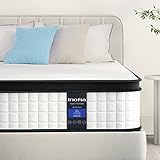
- 𝙊𝙥𝙩𝙞𝙢𝙖𝙡 𝙋𝙧𝙚𝙨𝙨𝙪𝙧𝙚 𝙍𝙚𝙡𝙞𝙚𝙛 & 𝙎𝙪𝙥𝙥𝙤𝙧𝙩: Our queen mattress combines high-density memory foam with 7-zone pocket springs to deliver the perfect balance of comfort and support. The innovative multi-layer system cradles pressure points while maintaining proper spinal alignment, offering targeted relief for back, side, and stomach sleepers. Experience motion isolation and wake up refreshed without morning aches.
- 𝘼𝙙𝙫𝙖𝙣𝙘𝙚𝙙 𝙏𝙚𝙢𝙥𝙚𝙧𝙖𝙩𝙪𝙧𝙚 𝘾𝙤𝙣𝙩𝙧𝙤𝙡: Featuring breathable open-cell memory foam, our mattress actively circulates air to prevent heat buildup throughout the night. The cooling surface technology wicks away body heat, providing a consistently comfortable sleep environment that outperforms traditional memory foam.
- 𝘾𝙚𝙧𝙩𝙞𝙛𝙞𝙚𝙙 𝙌𝙪𝙖𝙡𝙞𝙩𝙮 & 𝙎𝙖𝙛𝙚𝙩𝙮: Independently certified by CertiPUR-US, this premium mattress contains no fiberglass and meets strict standards for durability, emissions, and performance. The high-quality materials are designed to maintain their supportive properties year after year, giving you peace of mind with every night’s rest.
- 𝙈𝙖𝙩𝙩𝙧𝙚𝙨𝙨 𝙞𝙣 𝙖 𝘽𝙤𝙭&𝙀𝙖𝙨𝙮 𝙎𝙚𝙩𝙪𝙥: Your mattress arrives compressed in a compact box for easy delivery and setup. Simply unbox and unroll – designed for one-person installation. Allow 48 hours to fully expand to its 80″L × 60″W × 10″T dimensions for optimal performance.
- 𝟭𝟬𝟭 𝙉𝙞𝙜𝙝𝙩 𝙏𝙧𝙞𝙖𝙡: Inofia offers a 101-night trial and 10-year limited warranty. We recommend rotating your queen mattress end-to-end every 2-3 months to extend its lifespan. Our customer service team is always available to address any questions or concerns.
Last update on 2026-10-15 / Affiliate links / Images from Amazon Product Advertising API
Is Your Mattress Making You Feel Tired?
You may not realize it, but your mattress may be making you feel tired. If you’re always tired, there’s probably something else causing your sleep problems. Your mattress could be too soft or too firm. But if it’s the latter, you need to fix it quickly. Here are some signs to look out for that could be a sign of a problem. If you find yourself waking up tired every morning, you may want to replace your mattress immediately.
Signs that your mattress is affecting your sleep
A bad mattress is an obvious reason for your poor sleep quality. It can wake you up feeling drowsy and achy each morning. You may be sleeping for seven to nine hours, but you still wake up sore or stiff. If you have a sensitive nose or suffer from allergies, your mattress is probably full of dust mites. If your mattress is old, you could experience these symptoms as well.
If you’re noticing these symptoms, it’s time to replace your mattress. Bad mattresses can cause all sorts of health problems, from poor posture to a higher risk of asthma. Changing your mattress can solve these problems and improve your sleep quality. Whether or not your mattress is affecting your health is a personal decision, but it’s worth considering. The experts at Texas Mattress Makers can help you determine if it’s time to replace your mattress.
Poor sleep can also lead to fatigue. While you can flip your mattress every now and then, a new mattress is a necessary investment if you want to sleep better. Most mattresses are designed to last about 10 years, so you’ll likely be able to find a new one after a decade. But if you’re not sure about this, check with your doctor first. The best way to determine if your mattress is causing you problems is to take an informal mattress test.
Signs that your mattress is too firm
If you find yourself having problems sleeping at night, it might be time to get a new mattress. A too-firm mattress can be uncomfortable and cause back, neck, and shoulder pain. You may not even be aware that the mattress is too firm until you have a bad night’s sleep. Fortunately, there are a few easy ways to fix this problem. Read on to learn what you can do. Listed below are the main signs that your mattress is too firm.
One of the first signs that your mattress is too firm is if you wake up with stiff neck and back pain. You may also experience back aches, neck pain, and a numb feeling. You might feel tired in the morning because the mattress is too firm, but this is usually a sign that your mattress is too firm. Even if you don’t experience these symptoms, a firm mattress is likely to be too hard for your body.
If you wake up with back pain when you move, your mattress is probably too firm. The mattress should contour to your body and take the pressure off your limbs. A too-firm mattress can also cause tingling and numbness, which can be extremely painful and lead to insomnia. If these symptoms persist, you should replace your mattress. If you notice any of these signs, try removing any excess padding or bedding.

- Set Up: Simply take your mattress out of the box and enjoy watching it decompress; Jumping, walking, and sleeping on your mattress can speed up the process
- Gel infused memory foam regulates temperature while conforming to the body to ease pressure points
- Soft memory foam adapt to your body shape and temperature
- Fits all frames: Steel, wood or platform bed frames, box springs and floor
Last update on 2026-10-15 / Affiliate links / Images from Amazon Product Advertising API
Signs that your mattress is too soft
A hard bed may be more comfortable for some people than others, but a softer one is much more supportive and will keep you from feeling back pain and stiffness in the morning. Firm mattresses can improve circulation and spine alignment, while softer ones can reduce snoring. Firm mattresses may be better for people with back pain, but a soft one will be more supportive for those with firmer backs.
One of the most common signs that your mattress is too soft is a stiff back. This is especially noticeable first thing in the morning. Although back pain has many causes, stiffness in the morning is usually indicative of a too-soft mattress. Other symptoms of a softer mattress include grogginess or pain in the lower back. A soft mattress will not provide the necessary support to maintain spinal alignment and reduce pain.
If you experience neck and back pain, your mattress may be too soft. The pain is caused by pressure points in the mattress. If you wake up in the morning with back pain, you may need a new mattress. If you don’t feel supported and comfortable, you may need to replace your mattress. A firm one may also be too firm for your body and could result in back pain. A soft mattress may be more comfortable for some people, but it might not be right for others.


